Tuesday, 12 December 2017

Pre-Production - Script Draft 1 & Feedback

Condemned First Draft

Content

For the first draft of my script, the story starts off with David, the protagonist, standing outside of the prison gates reading the documents that highlight his living arrangements. From here he decides to explore the local area to see what has changed in his absence.

In scene 5, David finally gets a first look at his accommodation. He places the documents on his bed and walks over to the phonebook where he comes across the name of an old friend named Stephen, somebody he knew from before prison. David then decides to look for his daughter, Nicola's phone number, however he is unsure of how to use the phone. He instead writes down Stephens address and leaves.

Using the address he found in the phonebook, David decides to visit Stephen. Stephen is, as expected, surprised to see David and invites him inside to catch up. The pair have a long conversation about life before, during and after prison before Stephen urges David to speak to his daughter. When David arrives home, he calls Nicola but doesn't say a word, hesitating at the sound of her voice.

Again, David and Stephen return to the conversation about life during prison as well as the crime itself, the murder of Davids wife. The pair head into a pub where Stephen further urges David to call Nicola. Again, David arrives home and calls Nicola, only this time Nicola is aware of the call and the pair begin to talk, agreeing to meet the next day.

David, as well as Stephen, meet Nicola at the same pub as before. With the meeting going very well, David heads off to the toilet, leaving Stephen and Nicola to talk. It is in this moment that Stephen reveals to Nicola that it was in fact him that killed her mum, Davids wife. Nicola lashes out at Stephen and storms out of the pub, with David only catching the very last moments of the conflict, missing the big reveal.

Having only caught the very end of the conflict, all David took out of it was the fact that Stephen was a dying man. He decides to visit Stephen but finds him on his death bed. With Stephen assuming that David had found out everything, he sincerely apologises for the murder of his wife. Instead of helping Stephen by calling the doctor, he decides to leave Stephen to die.

Feedback

One of the biggest issues with the script, an issue I had with my last idea, is that there isn't much story happening, just a lot of plot. This was something I needed to revise, the key differences between plot and story.

Another issue is that all of the plot points in the script seemed to just fall in place for David and a lot of it is kind of random. How has David managed to discover the whereabouts of both Stephen and Nicola on his first day out of prison? While this is technically possible, it's not realistic.

Scene 8 in particular is a major issue. While David has been in prison for an exceptionally long time (40 years), he should know how to work an electronic kettle, they're not that recent of an invention. This further shows that the research made in preparation for this script was not very deep. The biggest issue of them all however, is that this scene is WAY too long for what it is. Conversational scenes such as this should not last longer than a page (maybe a page and a half at a push) unless the scene is particularly important both visually and technically. My scene is over 3 pages long and reveals very little in this time, it's more or less just a conversation.

The characters also need more development. This is perhaps something I should investigate before I begin the next draft of the script. I need to understand the characters IN DEPTH before I begin writing.

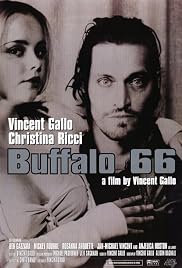
Pre-Production - Buffalo 66: Contextulised

Buffalo 66

Buffalo 66 is a film by actor and director, Vincent Gallo that follows a man named Billy Brown, an ex con looking to crawl his way out of a hole he never really meant to dig for himself in the first place.

As an audience, it is difficult to really care about Billy. He is an apparent maniac of a person with no manners or any real life qualities about him. However when he kidnaps student, Layla, to meet his parents, claiming that she is his wife, Layla grows attracted to Billy.

It's a tale of loneliness and disparity, two qualities that are well intwined within my own story. The details about Billy being an ex con as well as being this mannerless bastard of a human being almost makes him an alternative to David's character, or perhaps a reflection of David's past life.

I found the film to be brilliant and moving, with, at least in terms of my film, a heavily relatable character in Billy Brown, an ex con looking to reinstate his life in his own way.


Evaluation of Billy Brown's character

Billy's character is introduced into the film as this completely out of touch human being, in every sense of the word. His greasy, unwashed hair, patchy beard and leather jacket give off the impression that he has been lost in time in the five years that he has been in prison. He seems so unfit and so ill prepared for what is out there in the real world.

Estranged from his parents, one of his first acts as a free man is to organise a meet up with his parents who are completely unaware that he has been in prison for the last five years. He explains to his parents that he has been out of the country and has a wife named Wendy who is currently ill.

As I've already said, Billy is a strongly relatable character to what David would have been like before his big prison sentence, with some flashes of the modern day David thrown in there as well. Both have been alienated from society and feel out of touch.

Pre-Production - New Idea: Condemned

New Idea: Condemned

The Last Idea

Having pitched the last idea to Andrea, Simon and the rest of the class, we were told that the idea was not feasible and would be too dialogue heavy to work as a short. Although it was inevitably up to us as a group whether we would like to continue on with the idea or not, it was recommended that we came up with something new, something that would be easier to work with. We decided to begin working on a new idea, something that we would have to get together by our next tutorial.

The New Idea

So as aforementioned, we were tasked with creating a new idea to work with. This new idea needed more focus on the visual aspect of the film and less on the dialogue, something that the last idea failed to provide.

Short Synopsis - Having been locked away for over 40 years for the murder of his wife, a murder he’d never committed, David is finally set free when new evidence revealing he was not the killer. He meets with an old friend, Stephen, in an attempt to rekindle their friendship. However, he is met with the news that Stephen is tragically ill and does not have long left for the world. What he does not know is that Stephen holds a dark secret about his wives untimely death.

Characters

David - Recently released from prison for the murder of his wife, David is an introverted character who gets walked over by society but accepts it. Kind at heart, people have a tendency of taking advantage of his kindness for their own personal benefit.

Stephen - Stephen can be described as a chatty, extroverted character who was once very outgoing. Now that he is terminally ill, Stephen has become more and more introverted and snappy over time.

Points to think about

Does David kill Stephen or allow him to die at his own accord?
Does David serve the full 40 year sentence? Does his crime warrant a 40 year sentence?
Consider his temperament when thinking about his sentence.
Drunken spat between Stephen and the wife, that's how she dies?
Play on the fact that David and Stephen were best friends before prison.

David remembers Stephen and contacts him through details he finds in the yellow pages.
David is being rehabilitated into this whole new world - he discovers new things everywhere.
40 years would have to be a brutal murder
Never protested the conviction - so wound up and quiet
Blames himself despite not remembering the crime. Convinced himself he's the murderer?

Think about a third character. A daughter? He's never met her. Could also be Stephen's daughter(?)
How do we find out Stephen is dying?
Would a day release apply to this crime?
Stephen's terminally ill state leaves him with his own 'life sentence'.
Dramatic irony at the end

Keep it visual, not too much dialogue, don't tell it, show it
Killed wife because she's pregnant?
Maybe David kills Stephen as a form of redemption for himself as opposed to revenge.
Set it up that David is innocent, the reveal he isn't

Pre-Production - Generating Idea & Feedback

Generating Idea & Feedback

Changes

Before going into detail about my new ideas and what will happen with these ideas, one change (or addition rather) made to our group is that Troy Smith will be joining as our Director of Cinematography, his job will be to collaborate with the Director, Josh Bayly, by help making artistic and technical decisions on what will be seen on the screen.

Generating Idea

As mentioned in a previous post, our focus has shifted onto new ideas, ideas that hold a greater identity and are more authentic in concept.

In generating new ideas, we quickly realised how often we would shift towards the plot of the film, rather than the story. Whatever this idea would be, it will need a goal and direction before plot points are put in place. As inspiration, I began looking into every day scenarios with potential obstacles to overcome for the protagonist. This could be anything from a job interview to public speaking. In order to come up with potential morals, I looked at a number of different idioms and fables. One idiom I looked into was Let Sleeping Dogs Lie
Do not disturb a situation as it is - as it would result in trouble or complications.
Ideas began to spark about how disturbing a situation can lead to a greater story. For example, one man bumps into another man while walking on the street and does not acknowledge the other mans presence even after making contact and continues. The man who was bumped into then reacts and shouts at the other man. Had he just let the situation be, neither man will have had to face any real consequence, however by reacting in such a way, either one of the men, perhaps even both, may have to deal with a potential consequence of the other mans actions, whether this be an argument or even a fight. While this particular scenario is rather short and doesn't leave the audience much to take away, by applying this mind set to larger situations with more story to it.

Away from idioms and fables for a moment, I came up with the story of a man who is due for a job interview, and the only way he can get there is by public transport at peak times. The issue is, he is afraid of crowded spaces, and he really wants this job. A story such as this will see a character with a goal, an obstacle preventing him from reaching this goal and inevitable change.

However the idea I decided to carry forward into my feedback session was an idea loosely based off the fable, The Shipwrecked Imposter. The story would follow a dinner party involving two couples. Two of these characters once went to school with one another, however only one of these characters remembers the other and therefore does not know his name. The character who does not remember plays along, managing to avoid ever actually having to say their name. Eventually one of the characters catches on and exposes the other for not remembering, ending the dinner party.

Feedback

While Simon was okay with the general idea, some key changes needed to be made in order to make the story work. While the moral is clear, the conclusion is not. The idea of having two couples doesn't really offer much to the story and there needs to be a motive for dinner party that could lead to a greater consequence. One example Simon offered was that the wife invites her boss round, and the husband doesn't remember the boss from school. This one change in character can offer so much more to the story. Could this dinner lead to a possible job opportunity? A promotion perhaps?

Away from the idea, I have been advised to look closer at my role in terms of what I will be doing on this film over the course of the pre-production unit. This also goes to Josh and Troy. For me, this will include looking into the story and plot in more depth, doing some research on these characters and scenarios similar to this. I should then look at how to script a potentially dialogue heavy short film and liaise with Josh and Troy to find out how we can make it look interesting visually.

Pre-Production - My Role as a Screenwriter

My Role - The Screenwriter

Another role that I have taken up is the role as the script writer for Condemned. Balancing the two roles as both a screenwriter and a producer will prove to be a challenging task, however it is one I am willing to take on.

In this post, I will be highlighting the various roles a screenwriter must undertake and what it will mean for me and my involvement throughout the year.

What is a Screenwriter

To be a screenwriter, one needs a very creative mindset and an in-depth understanding on the art of storytelling. The screenwriters role in the production of a film is very specific to one key area, script writing. A screenwriter must be able to research, develop and craft stories from literally nothing, though in some cases a screenwriter may be assigned with a specific story, tone or set idea in mind. It is the screenwriter who creates the blueprint for the director, producer and other crew members to work from.

My role as a screenwriter will involve forming the plot of the story, creating each and every character with strong and specific details, researching each plot point to ensure that my story is feasible, all before writing up the script. All of this will take place in the pre-production stage of the unit.

In the production stage, my role becomes more limited, however my role does not finish in the pre-production stage of the major project. It is always possible that changes to the script will have to be made during the shoot week to ensure that everything is up to date should any last minute changes need to be made.

Pre-Production - My Role as the Producer

My Role - The Producer

As mentioned in previous posts, I have taken up the role as the Producer of our group. My previous experience in producing larger scale student projects is limited, however I hope that my role as the Assistant Producer for The Big Movie Quiz in the Studio Production unit last proves to be valuable to the production.

In this post, I will be highlighting the various roles a producer must take up and what will be expected of me over the course of the year.

What is a Producer?

It is often asked by the general public what it is the producers actually do. Some producers may respond with the witty remark that the producers do all the work, while the director gets all the credit. While this isn't 100% true, as the roles are split amongst the rest of the crew, producers are generally in charge of everything and everyone around them. It is the producers who bring in the crew, the casting, the contributors and some (like myself in this case) may even create the story. The producer is the fundamental key to the outcome of the final product as they are involved from the very beginning, often before the story has even been laid out, right until the very end and even beyond.

Pre-Production

During the pre-production stage, I will be in charge of:
  • Sourcing the locations
  • Finding the right contributors
  • Organising the auditions to help source the appropriate casting
  • Evaluating the budget for the film
  • Develop a shooting schedule
  • Etc.
In other words, I am involved in almost every detail involved with the pre-production process.

In order to complete a number of these tasks, I will be contributing with the director (Josh) and the cinematographer (Troy). Alongside Josh, I will be finding the most appropriate cast members for the film for which I have equal say in the final choice (though it will be me who brings them in for the auditions and me who will let them know if they're successful and we're we will go from there). With Troy I will be sourcing locations and working out what will work best for both the story and my vision, as well as his visual interpretation.

Production

It is the shooting stage of the production where the producer often begins to take a back seat and allow the director to take charge of what goes on on the floor. I will not be rendered completely useless, and at times, I may even prove to be especially useful. As the producer it is my duty to ensure that all of the cast, crew and contributors are happy with everything that is going on. I am also able to make creative decisions and share them with the director.

Post-Production

Like with the production phase, my role as the producer will be to liaise with the other crew members in ensuring that everything is running on schedule and that we are ready to meet any deadlines set by myself or the higher powers (the executive producers).

I will be reviewing any rough cuts and fine cuts and will work to ensure that everything is where it needs to be. If something needs reshooting, it will be up to me to find an eligible date in order to film that scene again.

Pre-Production - Initial idea & feedback

Initial Idea & Feedback

Project Brief

Whether I will be working on my own or in a group, the unit is set to test my ability in a set role that could potentially align with a potential career, the aim being to create a package for an original production, whether it be a hypothetical idea or something that I will go on to create in the following unit. Just some of the possible options for the pre-production unit include:

Professional Pre-Production

A large scale idea with the aim of competing with what is currently on television. This idea will be set up to be commissioned to a broadcasting company (e.g. BBC, ITV, HBO). As this idea will not actually be created in the following unit and is therefore not restricted to any budget.

Major Project Pre-Production

This option will see us, the students, creating a pre-production package for a project that we will then take forward into the production unit after Christmas. This could take the form of a short film, a documentary, a live production or anything that is achievable in a space of up to 20 minutes (our maximum guideline running time) on a student sized budget. This plan must therefore be very detailed.

Major Project - Screenplay Option

The screenplay option allows those who wish to get into screenwriting the opportunity to plan for either a television series or a feature length film with specific focus on screenwriting. This will involve writing up treatments, a synopsis and plenty of research points.
 Having chose one of these options, I must then choose a role to fill...

My Role and Ideas

For this unit I have chosen to take up the Major Project Pre-Production option, with the aim of producing and writing a short film alongside Josh Bayly, who will be the director. My role as the producer will involve creating the concept idea for this short film, bringing together and collaborating frequently with cast and crew, potentially sourcing locations and budgeting for the film. I will be tested on my integrity as both a team leader and co-worker and must understand when to say yes and when to say no, but must always remain open to suggestions.

My initial ideas involved creating a thrilling short that would allow for plenty of room for creativity from all roles. Potential ideas involved murder mystery's, drug busts and even horror. While my interest in film varies, a good number of my favourites included gang story's, mafia, or any sort of criminal activity (Reservoir Dogs, Fight Club and The Godfather are examples). While I was not looking to recreate and replicate these films, I did feel that a number of the ideas drafted were somewhat inspired by some of my favourite films.

The idea of telling the story of a bank robbery AFTER the incident in Reservoir Dogs intrigued me and I looked at how I could base a story around an incident without showing the incident itself. So one idea Josh and I had was to follow a drug dealer after a drug run gone wrong. The concept of the idea was relatively brief at this point.

Feedback

The issue with our idea is that there was too much focus on the plot of the film and not enough on the story itself. As a result, the idea didn't seem to really go anywhere, and while the visuals for out short could have potentially been very gripping and interesting, the story itself perhaps would not have worked as well as it perhaps should.

Another issue is that our knowledge on drugs and crime is limited to what we have seen on TV and on the big screen, it's not authentic to us. Simon suggested going for an idea that is more personal to us or go for an idea that is more relatable to an audience.

Leaving the meeting with Simon, I will look towards creating an idea that I can identify with. I will also change my approach to finding and finalising my idea, by crafting the story BEFORE looking at the plot, what's the purpose of this film?